Botanical Embroidery: How to Stitch Leaves, Stems and Flowers
A beginner guide to botanical hand embroidery: choosing plants, stitch recipes for leaves, stems and flowers, colour palettes and composing a botanical hoop.
By Ayoub Farid · · 2 min read
Botanical embroidery (plants, leaves, sprigs and flowers) is one of the most popular styles of modern hand embroidery. It's forgiving (no leaf is perfect in nature), uses just a handful of stitches, and looks beautiful on hoops, clothes and gifts.
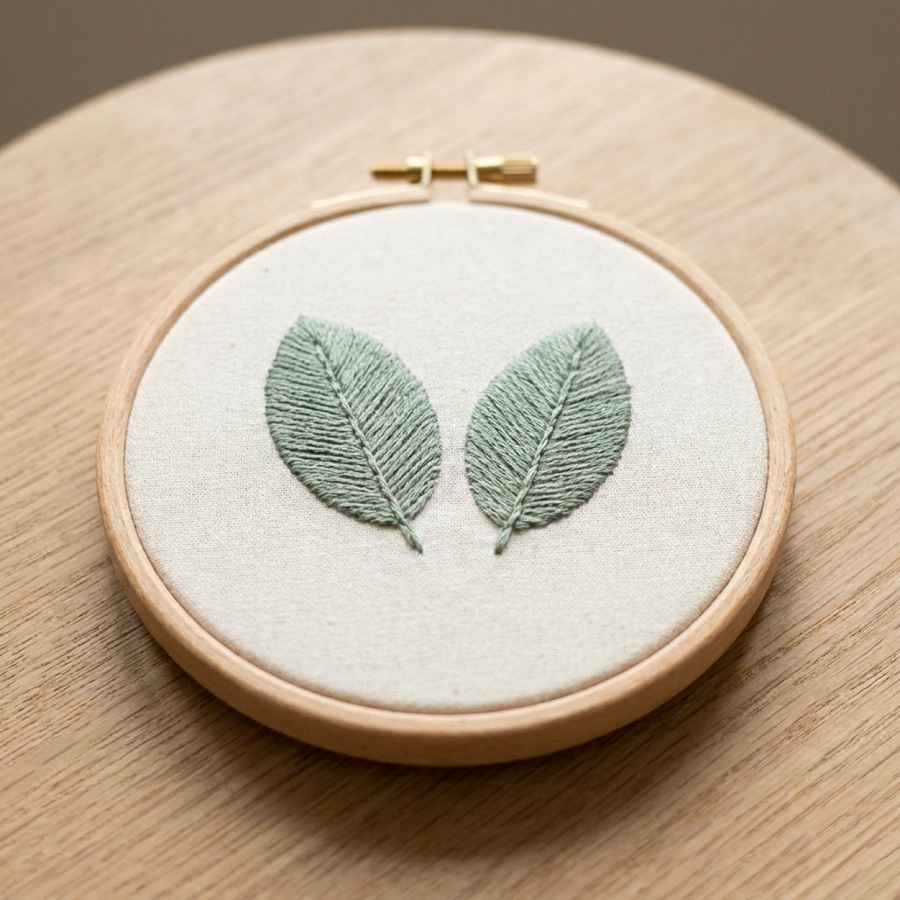
The botanical stitch toolkit
| Element | Stitches |
|---|---|
| Stems and branches | Stem stitch, split stitch, back stitch |
| Solid leaves | Fishbone, satin |
| Open, feathery leaves | Fly stitch, fern stitch, lazy daisy |
| Vines | Feather stitch, stem stitch |
| Small flowers | Lazy daisy, French knots |
| Roses | Woven wheel rose, bullion knots |
| Realistic petals | Long and short stitch |
Choosing plants
Start with plants that have simple, recognisable shapes:
- Eucalyptus: round leaves in satin stitch on a stem stitch branch.
- Olive branch: long narrow leaves in fishbone.
- Fern: fly stitch or fern stitch fronds.
- Lavender: see lavender embroidery.
- Monstera: outline in back stitch, optional satin fill.
- Wildflowers: see wildflower embroidery.
Botanical colour palettes
- Classic greens: sage, olive, forest and a touch of mustard.
- Muted garden: sage, dusty pink, cream, soft blue.
- Monochrome: all one colour (e.g. navy) on cream fabric for a modern, graphic look.
Tips in choosing thread colors.
Composing a botanical hoop
- Choose a shape: a wreath (circle), a crescent, a single sprig, or a bouquet.
- Draw the main stems first as curved lines.
- Add leaves alternating along the stems, varying size.
- Add flowers in odd numbers at focal points.
- Leave breathing room; empty fabric is part of the design.
Order of stitching
- Stems and branches
- Leaves
- Flowers
- Small details (French knot buds, pistil stamens)
Working from back to front keeps overlapping elements tidy.
Botanical on clothes
Small sprigs look lovely on collars, pockets and sleeves. See embroidery on clothes.
Botanicals were one of the most picked goals in Hoopie's onboarding ("Flowers & botanicals"), so the plan builds toward them: line stitches for stems in week 1–2, fills for leaves in week 3, and a flower hoop in week 4.
Frequently asked questions
What stitches are used for botanical embroidery?
Stem stitch for stems; fishbone, satin, fly and lazy daisy for leaves; lazy daisy, French knots and woven roses for flowers.
Is botanical embroidery good for beginners?
Yes. It uses simple stitches and natural shapes are very forgiving.
How do I make embroidered leaves look realistic?
Use two or three shades of green and fishbone stitch for a natural centre vein.
What fabric is best for botanical embroidery?
Cream or natural linen and cotton-linen blends look especially good.