Sashiko for Beginners: Japanese Running Stitch Explained
Learn sashiko basics: what it is, thread and needles, stitch length, simple patterns like grids and waves, and using sashiko for mending and decoration.
By Ayoub Farid · · 2 min read
Sashiko is a Japanese stitching tradition that uses rows of even running stitch to create geometric patterns. Historically it strengthened and repaired work clothes; today it's loved for its calm rhythm and graphic beauty, and it's central to the visible mending movement.
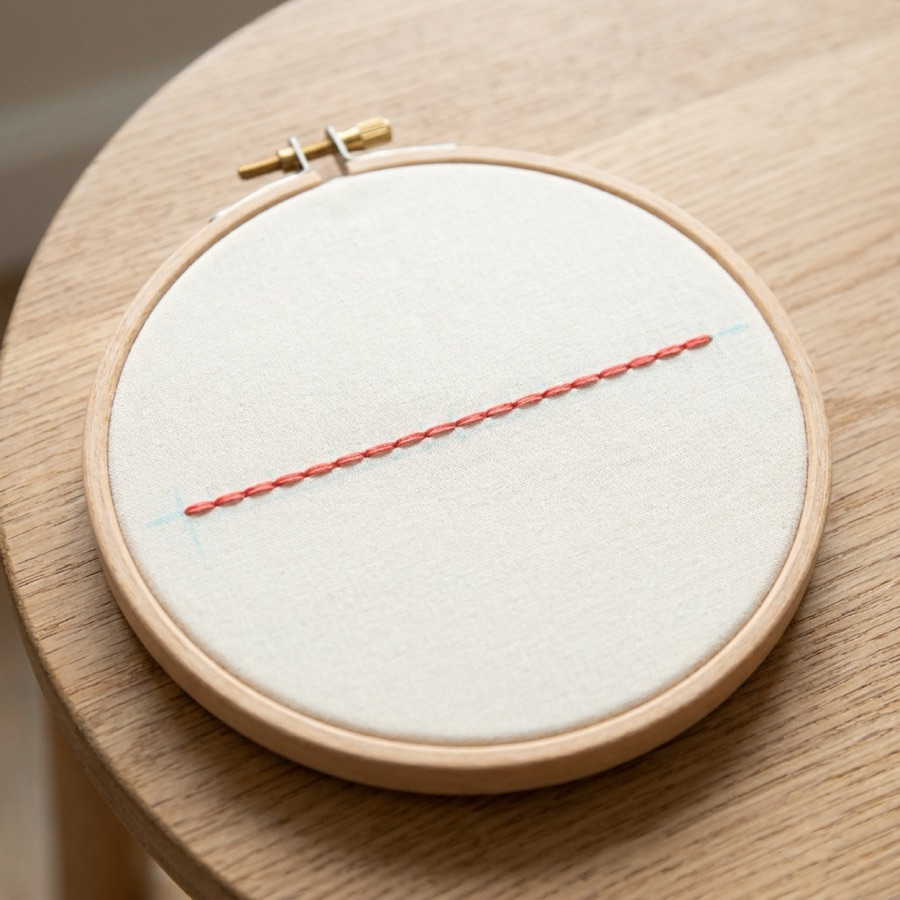
What makes sashiko different
- One stitch: running stitch, worked in rows.
- Patterns from repetition: grids, waves, crosses and overlapping circles.
- Even rhythm: stitches are usually longer than gaps (a common ratio is about 3:2).
- Traditional colours: white thread on indigo fabric, though any colours work.
Supplies
- Sashiko thread: a soft, non-divisible cotton. Six strands of floss or perle cotton work as substitutes.
- Sashiko needle: long, so you can load several stitches. A long embroidery needle works.
- Fabric: medium-weight cotton or linen; traditionally indigo.
- Thimble: a palm thimble helps push the long needle.
- Ruler and washable pen for the grid.
Basic technique
- Draw a grid or pattern lines on the fabric.
- Load several stitches onto the needle (sashiko is traditionally done without a hoop, scooping the fabric).
- Pull through and smooth the fabric along the thread so it doesn't gather. This step is important.
- Leave a small loop at turns at the end of each row, so the fabric can flex.
- Don't cross stitches at intersections; leave the crossing point empty for a clean look.
Beginner patterns
| Pattern | Description |
|---|---|
| Straight rows | Parallel lines, the simplest |
| Grid (kakinohana style simplified) | Horizontal and vertical lines |
| Waves (seigaiha-inspired arcs) | Overlapping arcs |
| Crosses (jujizashi) | Small crosses on a grid |
| Diagonal lines | Rows at 45° |
Tips for even stitches
- Consistent ratio: stitches about 1.5 times the gap length.
- Count stitches per grid square and keep them the same.
- Smooth the fabric after every needleful to prevent puckering.
Uneven stitches are the main challenge. See uneven embroidery stitches for drills. Hoopie's first lesson is an even running-stitch line, which is excellent sashiko practice.
Projects
Coasters, tote bags, patches on jeans, napkins, and mending. See visible mending.
Frequently asked questions
What is sashiko?
A Japanese technique of decorative and reinforcing running stitch in geometric patterns.
Can I do sashiko with embroidery floss?
Yes, six strands of floss or perle cotton work well if you don't have sashiko thread.
Do you use a hoop for sashiko?
Traditionally no; you load several stitches on a long needle. Beginners can use a hoop with the stab method.
What is the stitch ratio in sashiko?
Stitches are typically a bit longer than gaps, around 3:2, but consistency matters more than the exact ratio.